The Story
Every city has a story.Some are written in its streets.
Ethiopia's cities carry their histories in architecture, public spaces, neighborhoods, and everyday life. Behind their buildings are stories of people, cultures, and encounters that have shaped each place over generations.
The Ethiopian City Guides series invites readers to discover these stories through illustrated publications that bring together historical research, original artwork, maps, and walking routes.
Created for the French Centre for Ethiopian Studies, the guides offer a different way to read and experience the city.
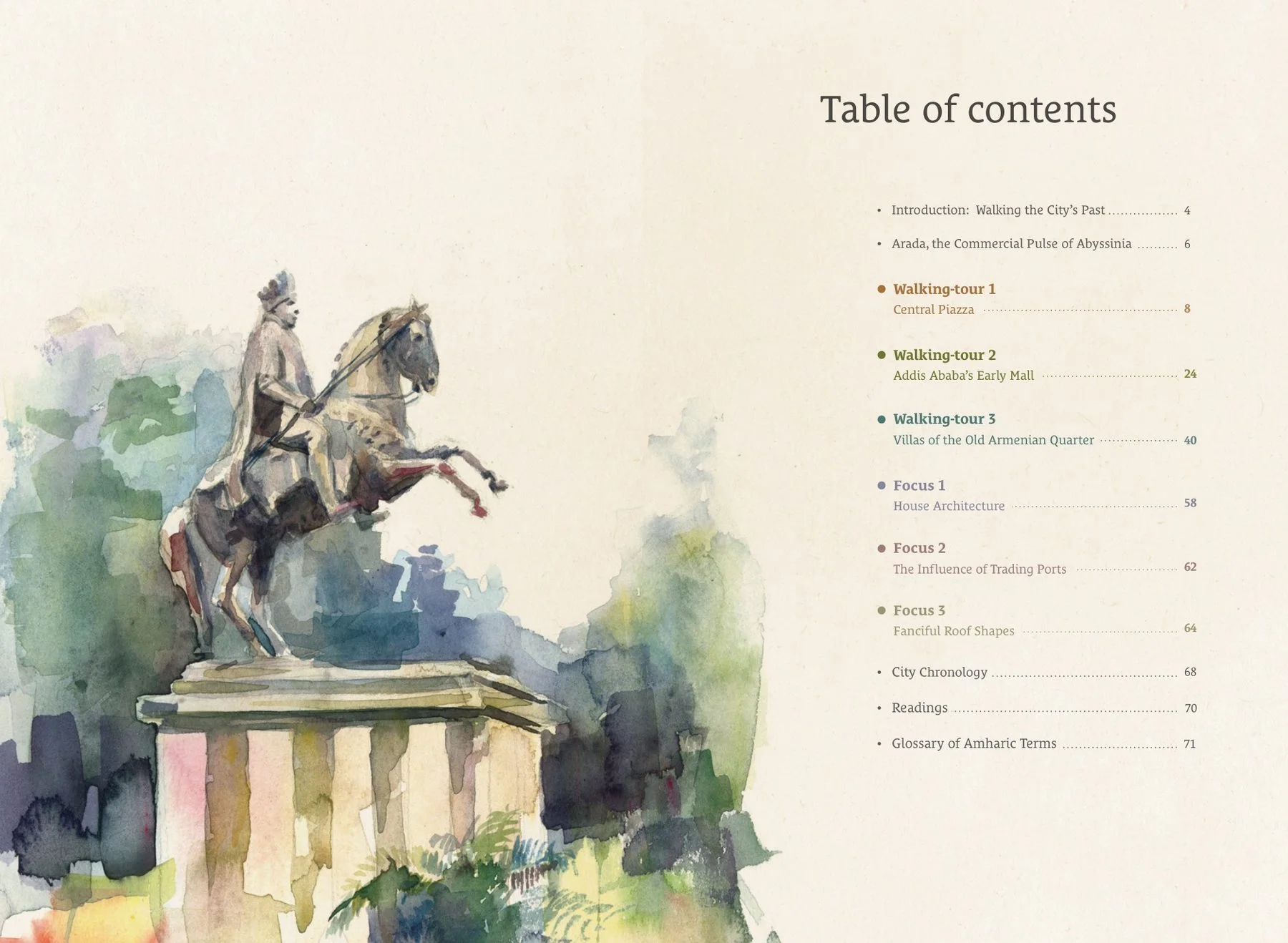
The Idea
History you canwalk through.
The idea was to turn historical knowledge into a journey of discovery.
Working with researchers, writers, and artists, Resolution Studio brought together editorial design, watercolor illustration, and cartography to create publications that are both informative and inviting.
Each guide balances detailed historical accounts with visual storytelling, encouraging readers to observe the buildings, streets, and architectural details around them.
- 1
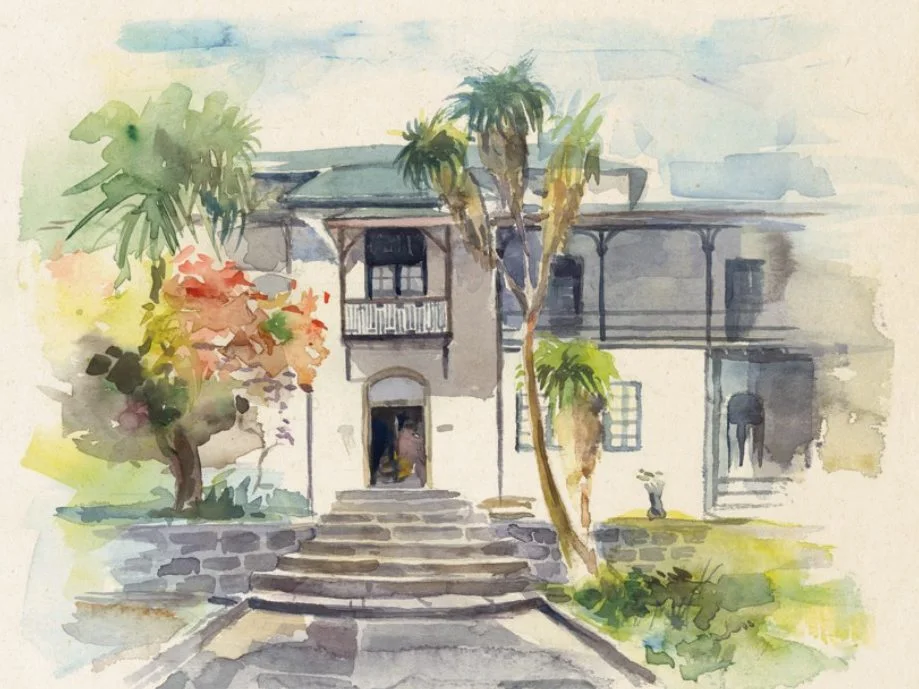
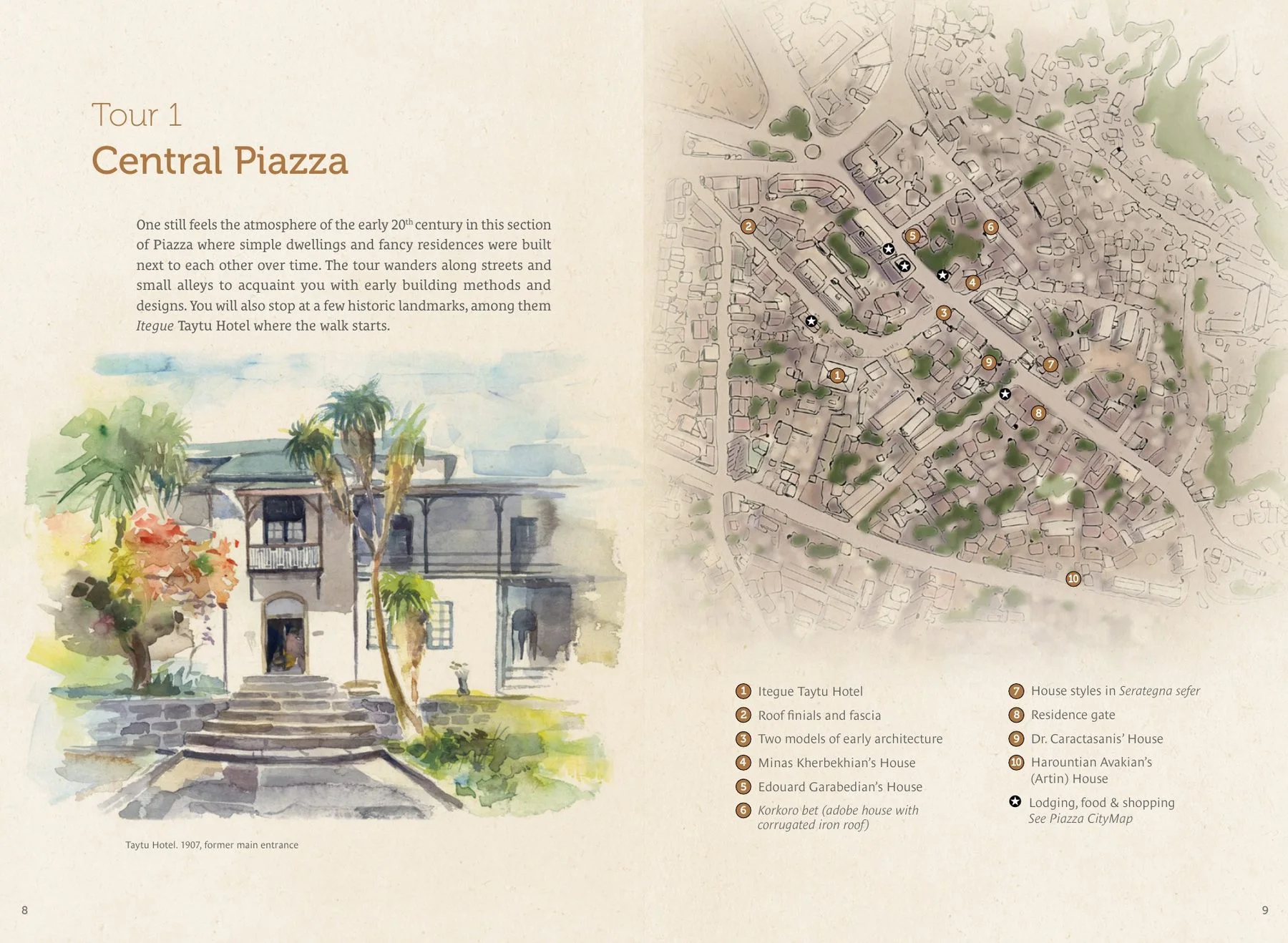
Tour 1 · Central Piazza
Itegue Taytu Hotel - 2
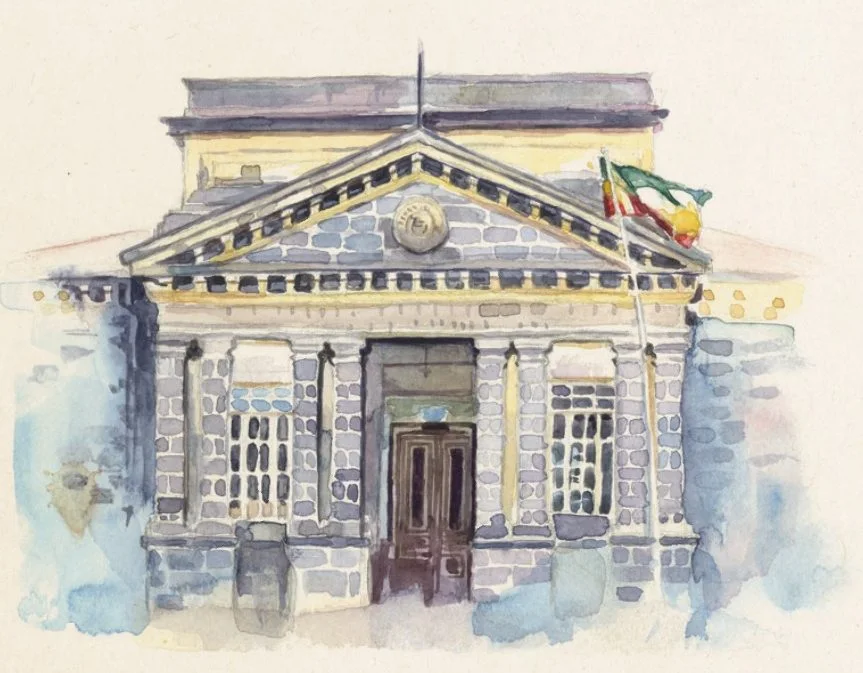
Tour 2 · Addis Ababa's Early Mall
The Bank of Abyssinia - 3
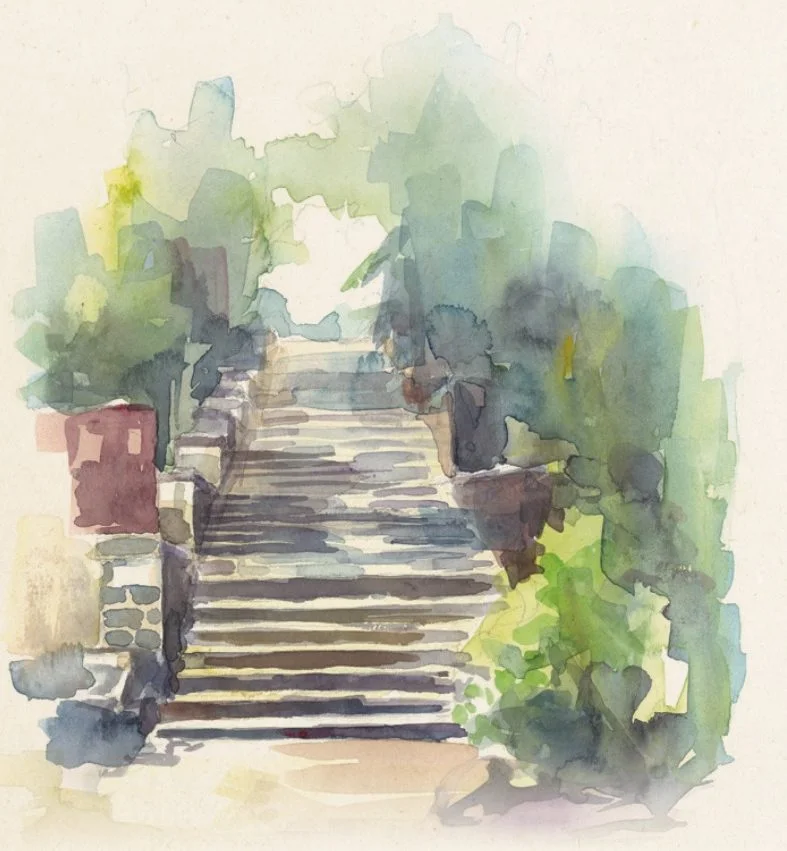
Tour 3 · Villas of the Armenian Quarter
Seba Dereja, the seventy stairs
The Work
The city, in detail.
Illustration
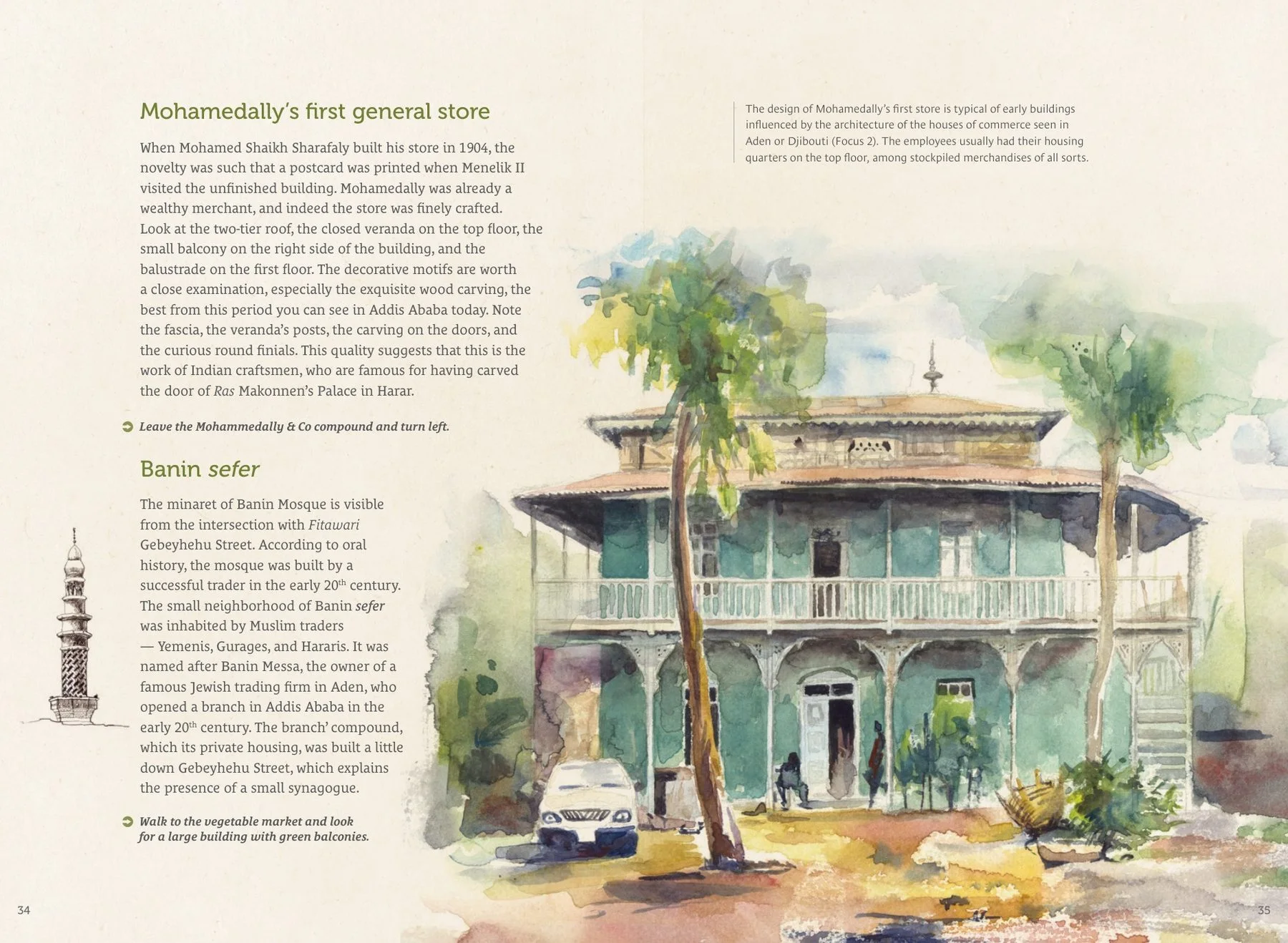
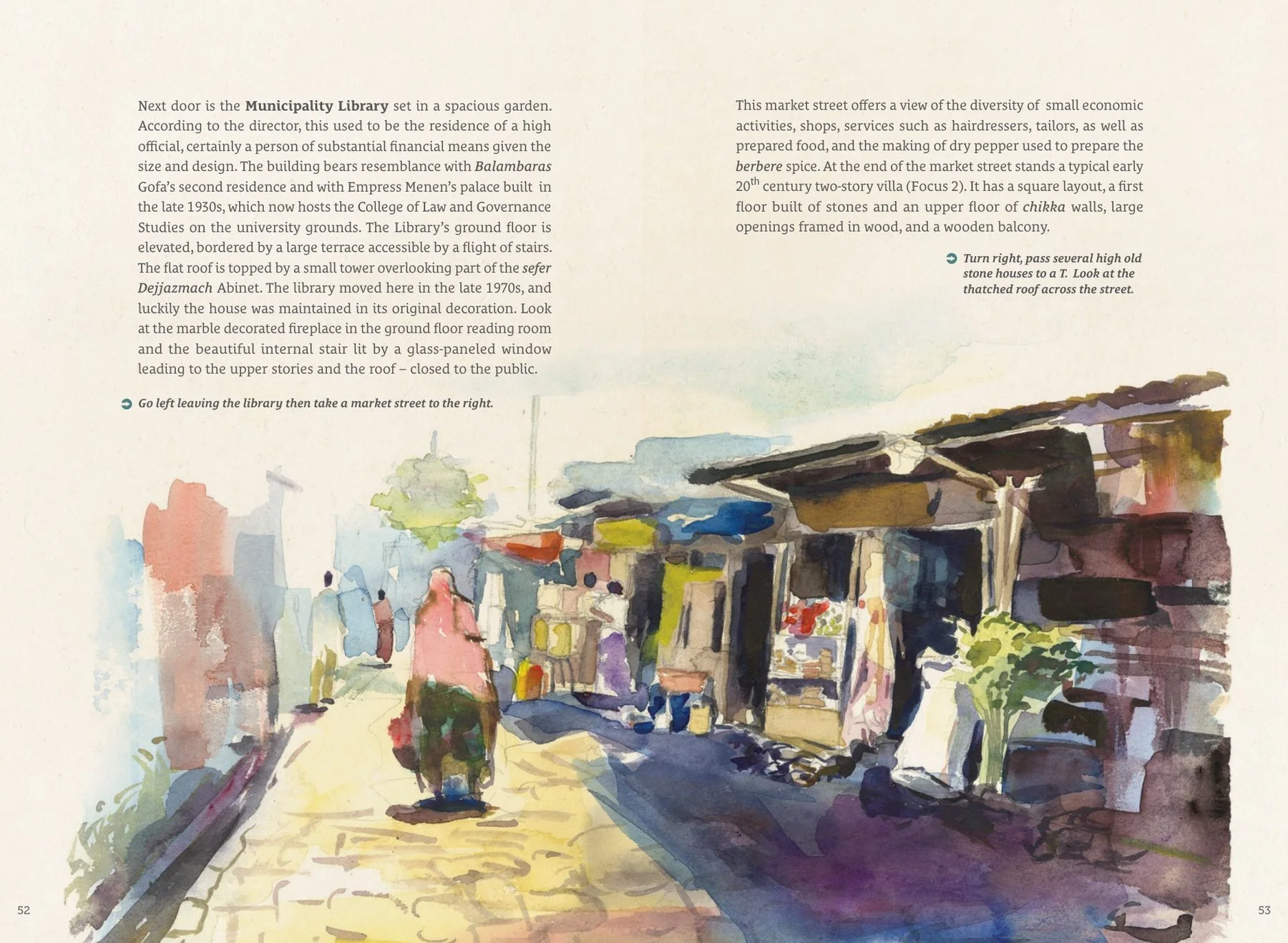
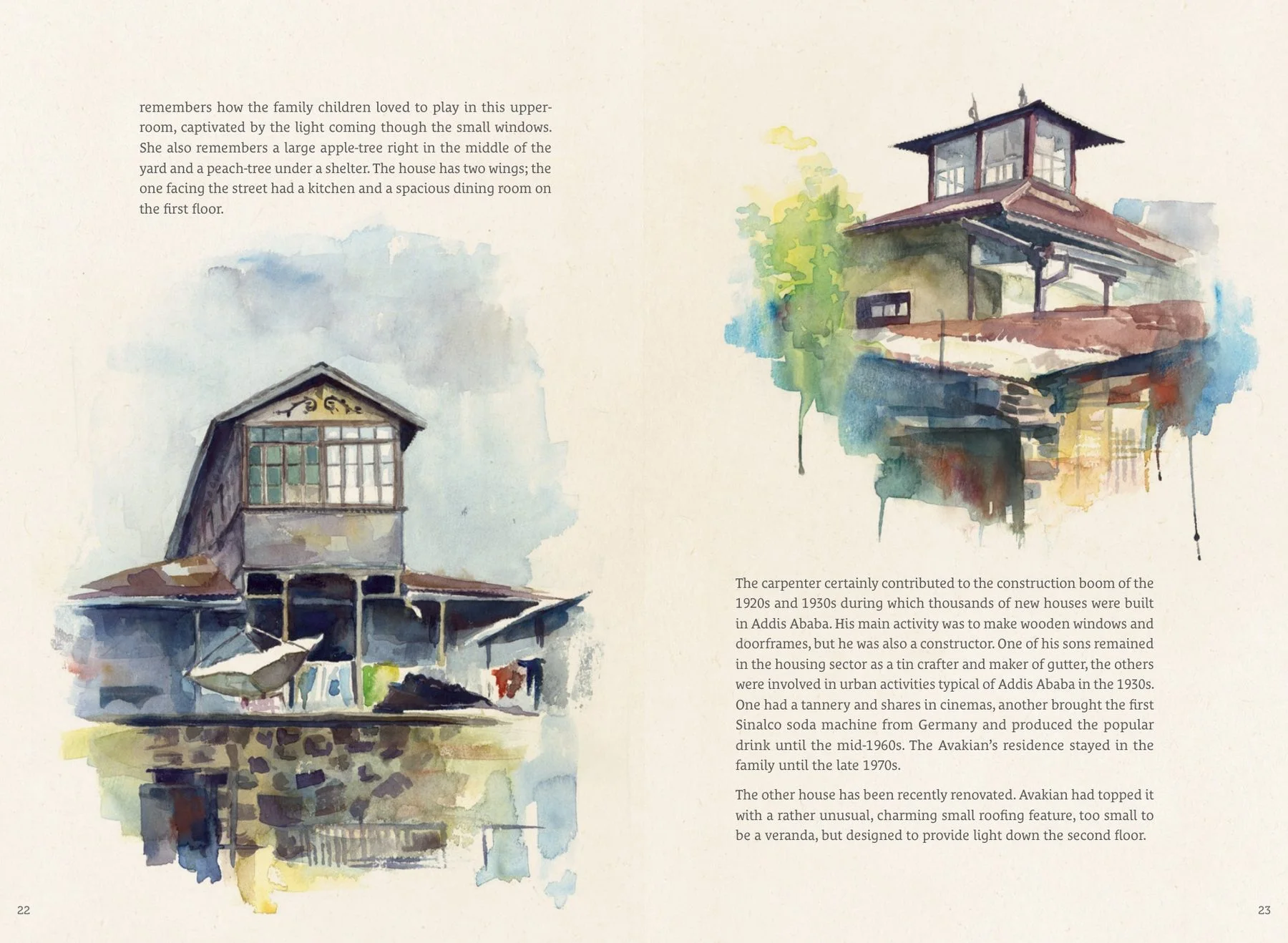
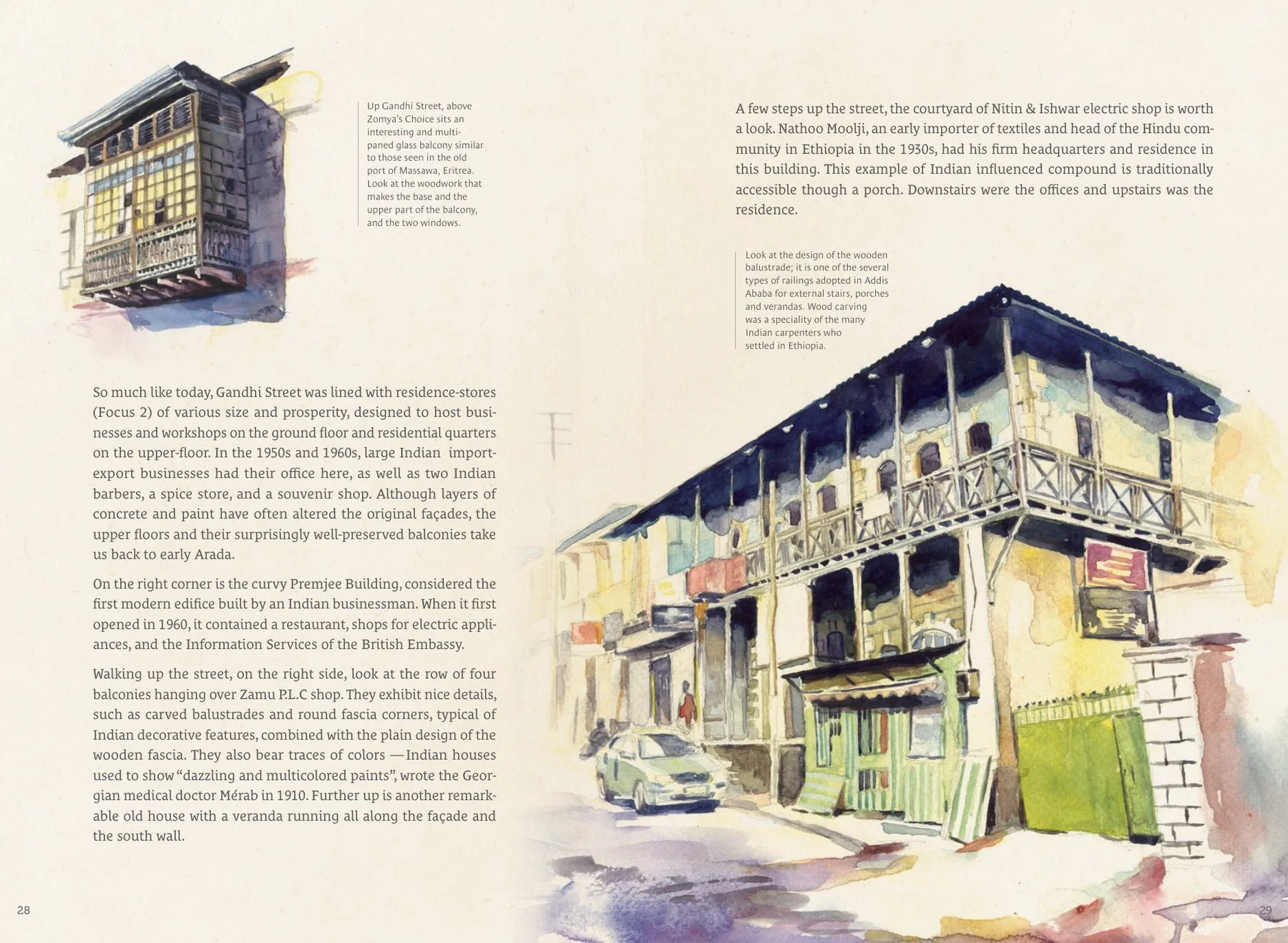
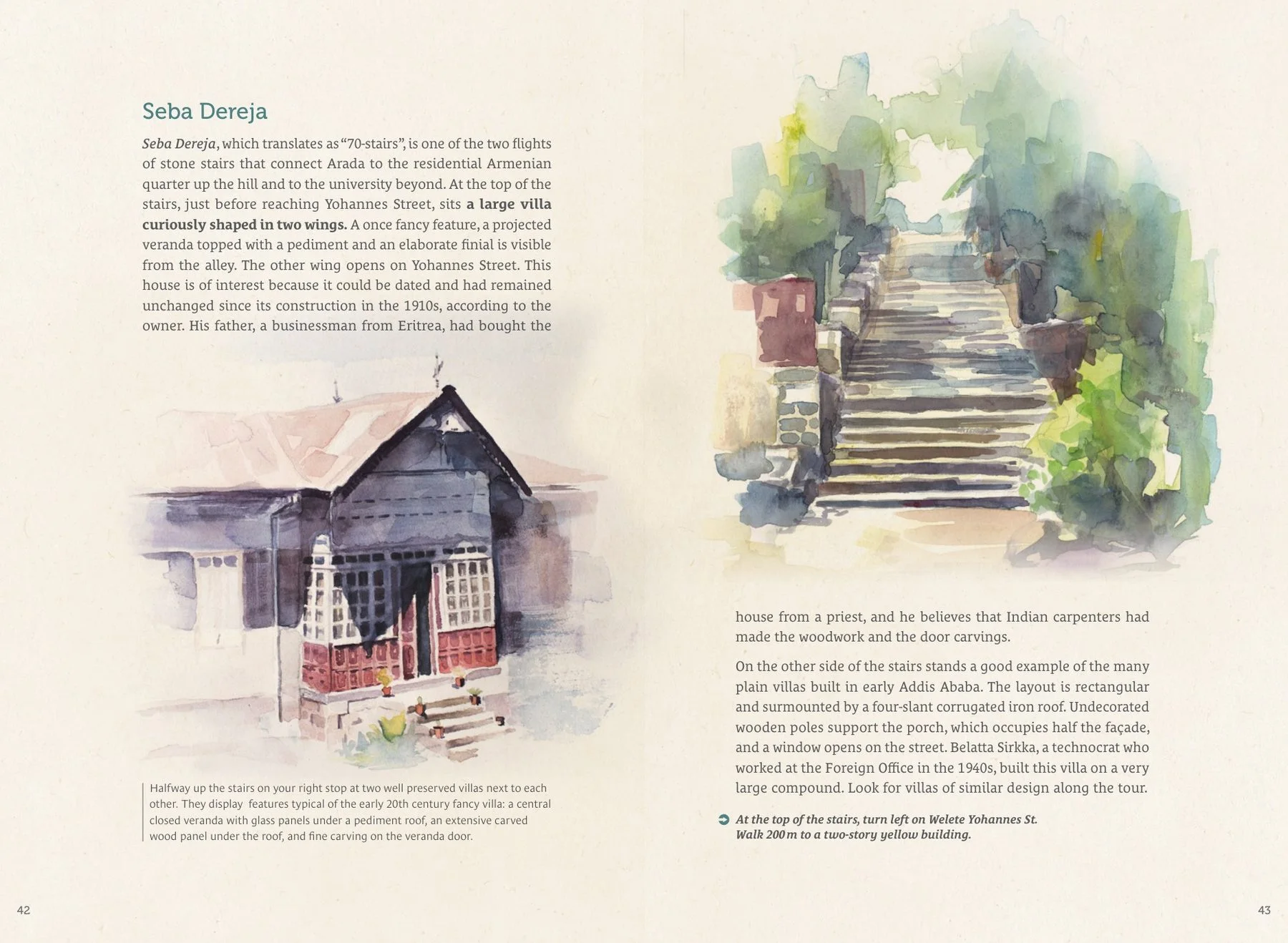
Watercolor illustrations capture the character of buildings, streets, and landmarks, revealing architectural details and giving each publication a distinctive visual identity.

Editorial Design
Thoughtful typography, page composition, and visual hierarchy bring historical narratives and artwork together, creating a reading experience that feels both accessible and considered.
Cartography
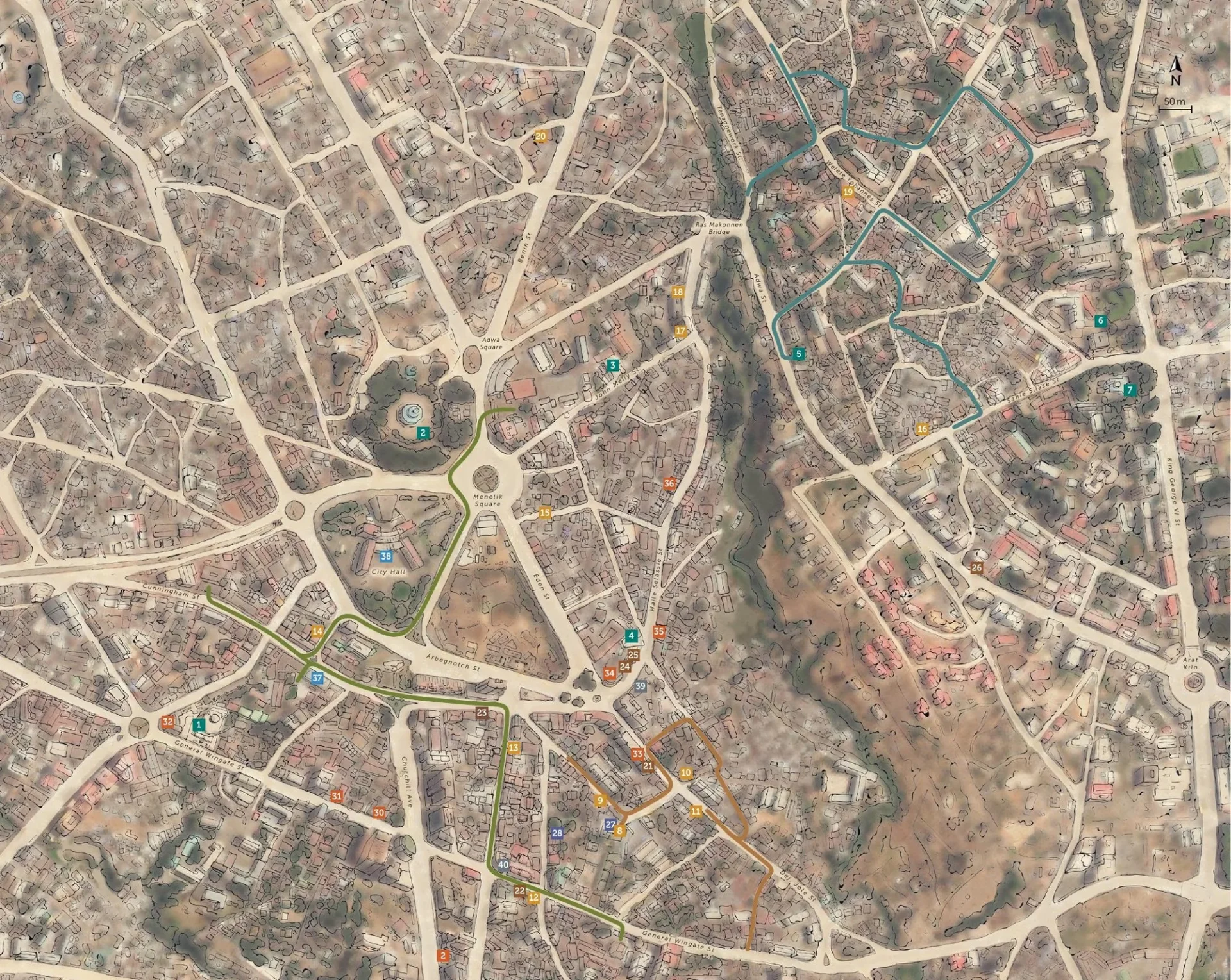
Illustrated maps and self-guided walking routes connect the stories on the page to the physical city, inviting readers to explore at their own pace.
The Series
Three cities.Different histories.
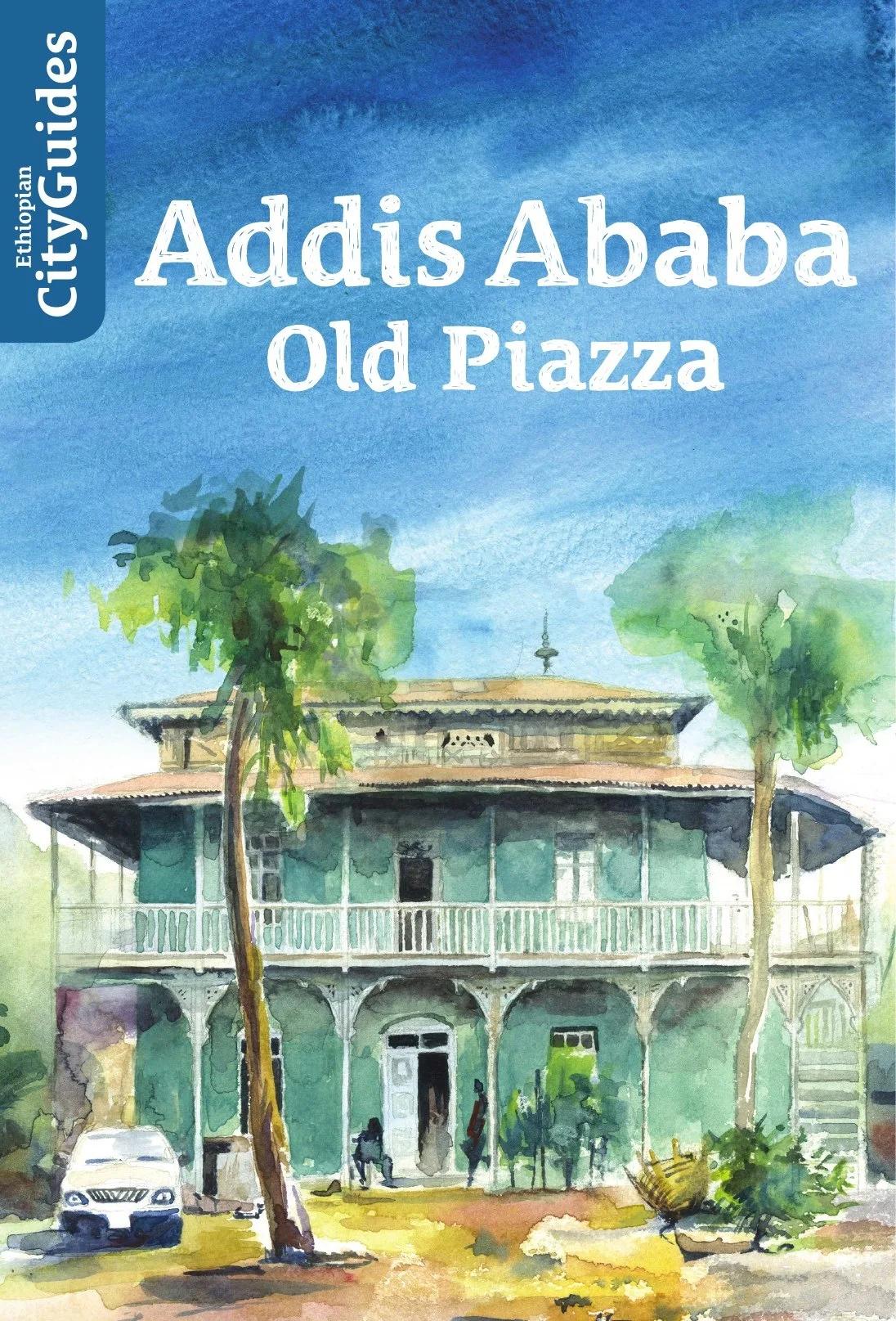
Addis Ababa · Old Piazza
A journey through Arada, one of Addis Ababa's historic commercial centers. Three walking tours reveal its early architecture, trading history, and the cultural influences that shaped the neighborhood.
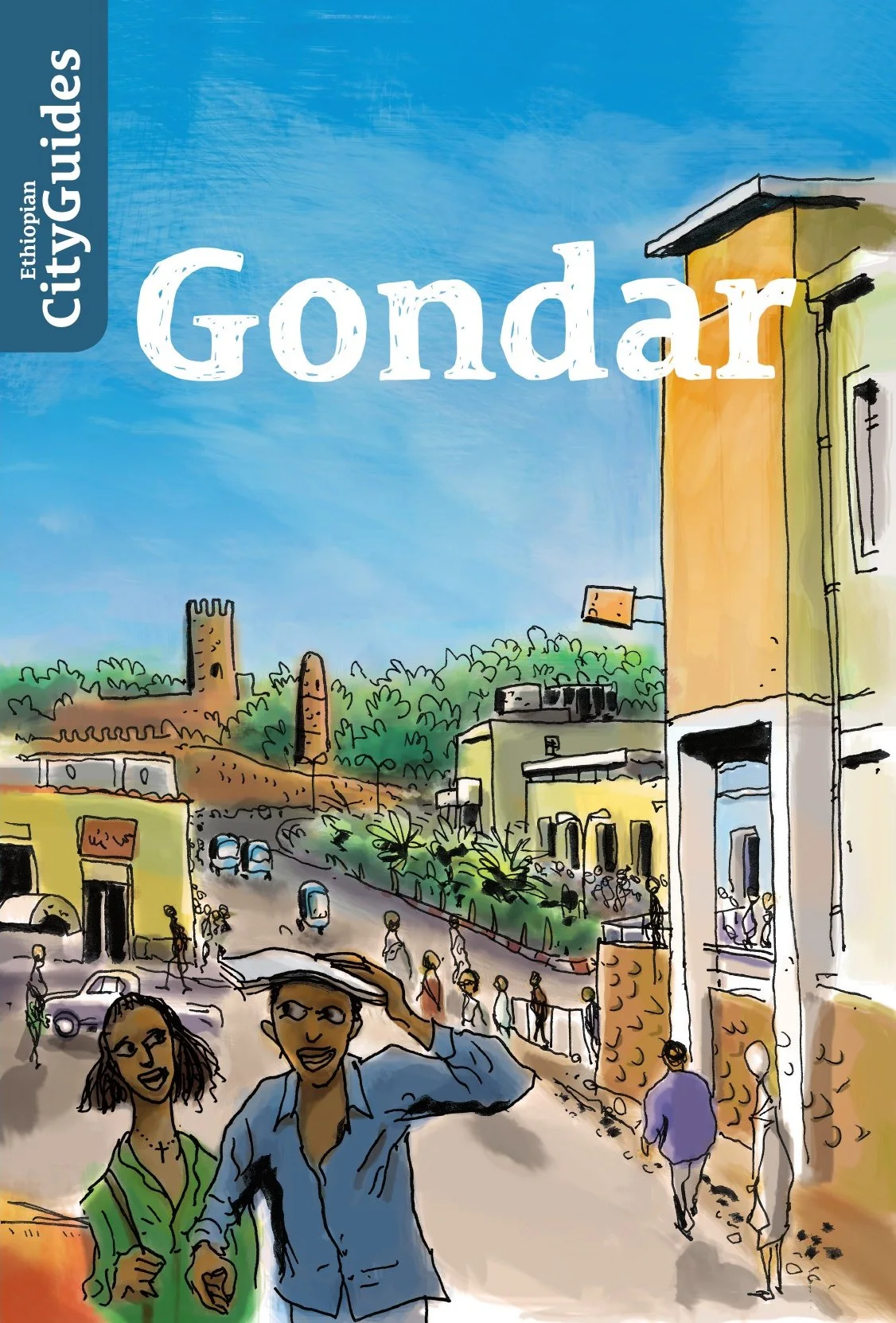
Gondar
An illustrated guide to the former royal capital, exploring its architectural heritage, historical landmarks, and the stories surrounding the city.
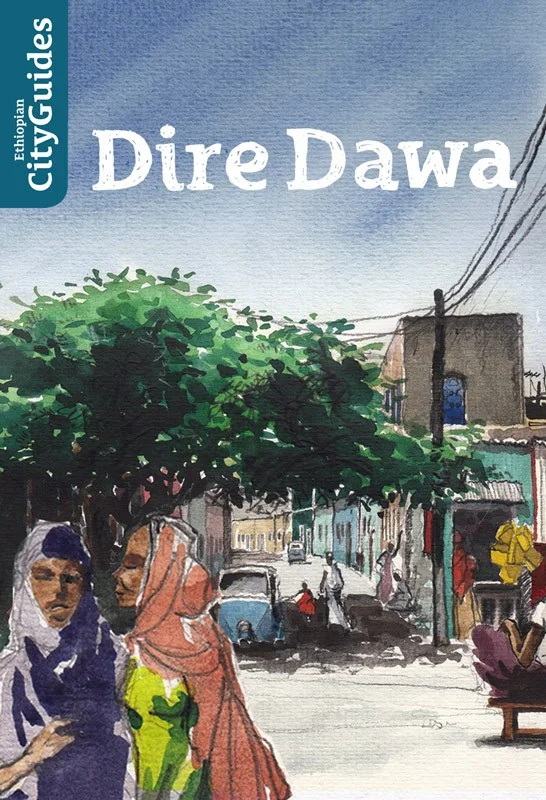
Dire Dawa
A visual exploration of the city's distinctive urban character, architecture, and cultural history.
The Outcome
A different wayto experience a city.
The City Guides series brings together research, design, and illustration to make Ethiopia's urban heritage more accessible.
Each publication becomes a companion for discovery, connecting readers with the histories and details that give a city its character.
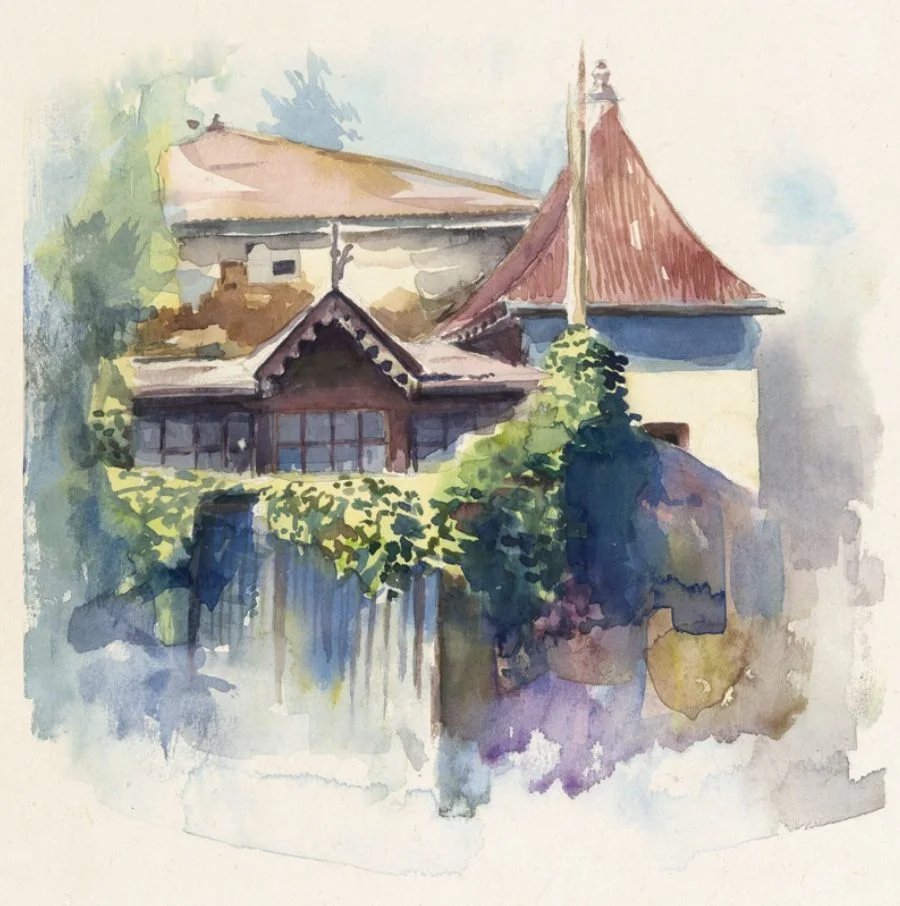
Every street holds a story
- Project
- City Guides
- Client / Publisher
- French Centre for Ethiopian Studies (CFEE)Client name to be confirmed
- Disciplines
- Editorial Design · Illustration · Cartography
- Publications
- Addis Ababa: Old Piazza · Gondar · Dire Dawa
Credits · Addis Ababa: Old Piazza
Designed, illustrated and mapped through Resolution Studio.
- Text
- Dominique Harre
- Illustrations
- Wondimagegn Gashaw
- Graphic design and maps
- Jonathan Le Péchon
- Publisher
- Centre Français des Études Éthiopiennes, with Shama Books, 2017
Credits for the Gondar and Dire Dawa volumes to be added from their imprint pages.